
Lead Acid vs Lithium Batteries for Electric Vehicles
Lead Acid vs Lithium Batteries for Electric Vehicles
-
Electric bicycles require lightweight, high-efficiency batteries to improve range and riding experience.
-
Electric tricycles and electric freight vehicles prioritize load capacity, continuous operating time, and economic efficiency.
-
Commercial vehicles need to consider long-term operating costs, battery life, and ease of maintenance.
Lead-acid batteries are a traditional energy storage technology with over 150 years of history and were one of the most commonly used power batteries in early electric vehicles. Lead-acid batteries mainly consist of lead plates, electrolyte, and a casing, generating electrical energy through a chemical reaction. Due to their mature manufacturing process and low cost, they are still widely used in the electric vehicle industry.
Especially in some price-sensitive markets, for example
- Economical electric tricycle
- Low speed electric scooter
- Short distance cargo truck
The lead acid battery still have the highly competitive.
The biggest advantage of lead-acid batteries is the price.
Compared to lithium batteries, lead-acid batteries have a simpler manufacturing process and more readily available raw materials, resulting in lower initial purchase costs. For users with limited budgets or businesses needing to purchase a large number of vehicles, lead-acid batteries can reduce upfront investment pressure.
For example, small electric vehicles used for community delivery, farm transportation, and short-distance logistics don't necessarily require extremely long range; choosing lead-acid batteries offers better value for money.
Lead acid batteries have good stability and are not prone to serious safety issues under normal use conditions.
For some vehicles that need to be parked for extended periods or operate in relatively simple environments, such as agricultural transport vehicles, industrial park vehicles, and low-speed freight vehicles, lead-acid batteries still have practical applications.
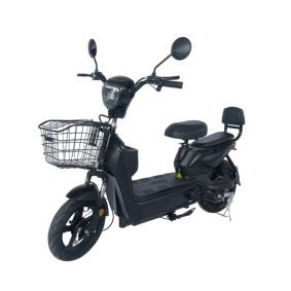 The AMOTO A11 is an excellent model with lead acid battery. Firstly, its design and configuration are simple, resulting in a low cost while still fully meeting buyer needs. The 500W high-efficiency motor provides ample power, and the 48V 20AH lead-acid battery can handle short distances of up to 40 kilometers. Furthermore, this model has passed the EEC certification testing, making it a highly cost-effective option.
One of the biggest disadvantages of lead acid batteries is the high weight.
Compared to lithium batteries of the same capacity, lead acid batteries typically require more materials, resulting in a greater overall weight.
This increased weight will affects:
- Electric vehicle range
- Electric vehicle performance
- Energy consumption
- Load capacity performance
For electric cargo vehicles that require improved transportation efficiency, battery weight is a crucial consideration.
Normally the lead acid batteries have a cycle life of approximately 300-500 cycles which is depending on usage environment and methods.
If the user uses the electric vehicle frequently every day, the battery may need to be replaced sooner. Over the long term, although lead acid batteries are cheaper, but frequent battery replacements could increase overall costs.
Lead acid batteries typically require long charging times and are not suitable for frequent fast charging equipment.
If the vehicle needs to operate frequently every day, for example
- Food delivery
- Urban logistics
- Commercial transportation
Long charging time may affect vehicle utilization efficiency and daily works.
The biggest advantage of lithium ion batteries is their higher energy density.
For the same capacity, lithium-ion batteries are significantly lighter than lead-acid batteries, thus enabling:
- Reduced vehicle weight
- Increased driving range
- Improved energy efficiency
For electric vehicles requiring long driving distance, such as electric cargo tricycles, electric mini trucks, and commercial delivery vehicles, the lithium ion batteries offer a better experience.
High quality lithium batteries could achieve 1000-3000 cycles or even higher, significantly exceeding the lifespan of traditional lead acid batteries.
Although the initial purchase cost of lithium batteries is higher, the overall cost may be lower in the long term because of the reduced replacement frequency.
Compared to lead acid batteries, lithium batteries have the following good points:
- Charge faster
- Have higher energy conversion efficiency
- Are more suitable for frequent use
For commercial electric vehicles, increased vehicle utilization translates to higher operational efficiency.
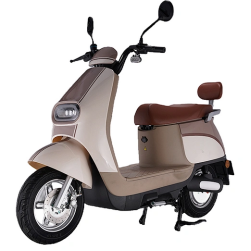 The AMOTO A21 is an excellent model equipped with a 60V 32AH lithium battery. Compared to the A11, this model is larger and heavier, but the lithium battery provides superior performance. It also features a 2.0kW motor, enabling a top speed of 45km/h and a range of 70km. This offers significant advantages over the A11, but naturally, it also comes at a higher cost.
7.Lead acid battery VS Lithium battery
|
item |
Lead acid battery |
Lithium battery |
|
Initial cost |
lower |
higher |
|
Weight |
heavier |
lighter |
|
Energy density |
Lower |
higher |
|
Lifespan |
around 300-500 cycles |
over 1000 cycles |
|
Charging speed |
slower |
faster |
|
Maintenance requirements |
higher |
lower |
|
long term usage cost |
higher |
lower |
|
Application |
Short distance, economical vehicles |
Long distance, high frequency driving vehicles |
8.How to choose the battery type
If your have the limited budget, and buy the electric vehicles for short distance daily use,
Choose the lead acid battery version might be a more economical choice.
If you have the high requirements for the long driving range, lower maintenance cost and longer lifespan, the lithium battery is the best choice.
Lead acid batteries and lithium batteries are not simple substitutes. But they have its own respective roles in different application scenarios.
For lead acid batteries, because of the low cost and mature technology, still have an important position in the economy electric vehicle market, while lithium batteries, with the advantages of lightweight design, high efficiency, and long lifespan, are leads the electric vehicle industry towards higher performance, intelligence, and environmental friendliness.
For consumers, corporate purchasers, and new energy vehicle operators, choosing the right battery type requires comprehensive consideration of vehicle purpose, budget, range requirements, and long-term operating costs.
As a company focused on new energy transportation, AMOTO is committed to providing reliable, efficient, and environmentally friendly electric vehicle products and solutions, helping global customers explore a greener and smarter future of mobility.
For more information on AMOTO electric products, please visit: http://www.amoto.group/.
The Ultimate Hauling Solution for Small Farms & Agricultural Estates
Amoto Global Market Insights: Why the World Is Choosing Electric Mobility