
qr Code Url

    Scan qrcode to view mobile website

    Data is empty
    0
    Member Center
    Exit
    Home /Blog /Blog /Electric vehicle selection /How to Choose an Electric Vehicle Manufacturer for Your Business /

    How to Choose an Electric Vehicle Manufacturer for Your Business

    How to Choose an Electric Vehicle Manufacturer for Your Business

    Amid the ongoing growth of global electric mobility and commercial logistics, selecting the right electric vehicle manufacturer has become a critical decision for importers, wholesalers, brands, and fleet operators seeking to establish a long-term competitive advantage. For B2B buyers, an ideal supplier must offer not only competitive pricing but also stable production capacity, reliable product quality, certifications that meet target market requirements, and consistent delivery and after-sales support.
    So, how does one choose a reliable electric vehicle manufacturer? The key lies in conducting a systematic evaluation across six areas: product suitability, manufacturing capabilities, certification compliance, battery performance, supply chain stability, and long-term procurement costs.
    As a supplier specializing in electric 2 wheel electric scooter,3 wheel electric scooter, electric cargo vehicles, and related mobility products, AMOTO provides a wide range of electric mobility solutions to global distributors, importers, and commercial clients.

    1. Define Your Business Needs Before Choosing an Electric Vehicle Manufacturer

    Before contacting electric vehicle manufacturers, it is essential to clearly define your target customers, usage scenarios, and procurement plan. Different business models entail distinct requirements regarding vehicle performance, specifications, certifications, and costs.
    For instance, vehicles intended for urban commuting typically prioritize driving range, comfort, and ease of handling, whereas commercial delivery vehicles require a focus on cargo space, payload capacity, braking performance, and daily maintenance costs.
    • Common types of electric vehicles available for purchase include:
    • Electric Scooters: Suitable for short-distance urban travel, personal commuting, and certain light commercial applications.
    • Electric Motorcycles: Suitable for users with specific requirements regarding power, speed, and longer-distance travel.
    • Electric Cargo Tricycles: Suitable for last-mile delivery, farm transport, warehouse handling, and small-scale commercial logistics.
    • Four-Wheel Electric Utility Vehicles: Suitable for cargo transport in specific settings, facility operations, and light commercial use.
    Before selecting a vehicle model, it is advisable to outline your target market, daily driving distance, load requirements, road conditions, projected purchase volume, and budget range.
    Key Recommendation: Determine the vehicle's intended use before comparing manufacturers. This helps avoid purchasing a lower-priced model that fails to meet your operational needs.

    2.Evaluate the Manufacturer’s Production Capability and Quality Control

    A reliable electric vehicle manufacturer should possess production capabilities commensurate with order volumes, as well as repeatable and traceable quality control processes.
    Buyers should look beyond product images and price quotes to verify whether the supplier has actual manufacturing facilities, a mature supply chain, stable component sources, and clearly defined factory inspection standards.
    When evaluating manufacturing capabilities, it is recommended to focus on verifying the following items:
    Items Requirements
    Production capacity Confirm whether the manufacturer can meet the requirements for trial orders, routine replenishment, and future order growth.
    Quality inspection Confirm whether inspections are conducted on critical components, vehicle functions, and the factory-exit condition.
    Component consistency Confirm whether key components such as the motor, battery, controller, braking system, and tires have clearly defined specifications.
    Order management Confirm the ability to clearly explain the production cycle, packaging method, delivery arrangements, and the process for handling exceptional orders.
    Documentation Confirm whether product specifications, user manuals, quality inspection records, and applicable certification documents can be provided.
    For importers planning a long-term electric vehicle business, consistent batch quality is often more important than a one-time low price. Issues such as product malfunctions, incompatible components, and delivery delays can all drive up after-sales costs and undermine customer trust.
    Therefore, before placing large-volume orders, it is advisable to request detailed technical specifications and—whenever possible—arrange for sample testing or a factory audit.

    3.Check Electric Vehicle Certification and Target-Market Compliance

    Certification and compliance are critical factors when selecting an electric vehicle manufacturer, particularly when planning to enter markets with clearly defined regulatory requirements, such as Europe.
    Different countries and regions may impose varying requirements regarding vehicle classification, maximum design speed, rated power, braking systems, lighting, electrical safety, and registration documentation. Even if two vehicle models appear similar, they may be subject to different certification requirements.
    Taking the European market as an example, buyers should verify the applicable whole-vehicle type approval, technical regulations, and documentation requirements based on the specific vehicle model and its intended use. Industry-standard certifications—such as EEC, EU Whole Vehicle Type Approval (WVTA), and the Certificate of Conformity (COC)—must be validated against the specific vehicle category and current regulations.
    Key checks prior to procurement include:
    • Whether the certification corresponds to the specific vehicle model and configuration being purchased.
    • Whether motor power, battery specifications, tires, and vehicle parameters align with the certification documents.
    • Whether the supplier can provide applicable Whole Vehicle Type Approval and relevant technical documentation.
    • Whether documents such as the COC apply to the specific vehicles and meet the registration requirements of the target market.
    • Whether the replacement of critical components during mass production affects the existing certification or compliance status.
    It is important to note that an E-mark on a component does not equate to the vehicle itself having obtained the applicable type approval. Whether a vehicle can be legally imported, registered, and driven on public roads depends on the prevailing regulations and requirements of the competent authorities in the target market.
    When selecting an electric vehicle manufacturer, one should evaluate both product performance and regulatory compliance capabilities, rather than waiting until after an order has been placed to address certification issues.

    4.Compare Battery Performance and Vehicle Specifications

    Batteries and powertrains directly impact the real-world user experience, operational efficiency, and maintenance costs of electric vehicles. For commercial procurement, product quality cannot be assessed solely based on battery capacity or the maximum range advertised by the manufacturer.
    the following items should be focused:
    Items
    Requirements
    Battery type
    Confirm battery type is lithium or lead acid battery, and specifications
    Battery capacity
    Confirm battery voltage, Amp-hour rating, and applicable battery configurations
    Motor power
    Confirm rated power and suitability for the vehicle's intended use
    Driving range
    Test conditions, load, speed, and ambient temperature
    Charging time
    Charging requirements, charger specifications, and estimated charging time
    Payload capacity
    Rated load, cargo box dimensions, and actual usage limitations.
    Braking system
    Braking configuration, maintenance requirements, and applicable safety standards
    Lithium and lead-acid batteries each have their own suitable applications. Lithium batteries typically offer higher energy density and lighter weight, whereas lead-acid batteries may be more attractive in terms of initial purchase cost. The final choice should take into account factors such as usage frequency, vehicle load, ambient temperature, battery lifespan, and replacement costs.
    Similarly, driving range should be evaluated based on real-world operating conditions. Factors such as heavy loads, frequent stop-and-go driving, steep gradients, low temperatures, and high speeds can all impact actual range.
    Therefore, it is advisable to request clear technical specifications from manufacturers and conduct testing based on the intended use case, rather than basing purchasing decisions on a single performance metric alone.

    5. Review Delivery Reliability and After-Sales Support

    For distributors and wholesalers who rely on continuous restocking, stable delivery and after-sales support are equally important.
    Before purchasing, it is essential to verify whether the manufacturer can provide clear information regarding order progress, packaging details, shipping documents, and delivery arrangements. Additionally, one should understand the supplier's policies on technical support, spare parts replacement, and liability determination in the event of product malfunctions or shipping damage.
    For European customers, overseas warehousing can reduce delivery times for certain in-stock products; however, it is important to distinguish between shipments from stock and orders requiring factory production. Delivery times may vary based on vehicle models, inventory status, destinations, and logistics arrangements.

    6.Why Consider AMOTO as Your Electric Vehicle Supply Partner

    For businesses seeking suppliers of electric 2 wheels scooters, electric tricycles, and 4 wheels electric cargo vehicles, AMOTO offers product and supply chain options worthy of further evaluation.
    The AMOTO brand is owned and registered by the Chinese company Horeca Technology Co., Ltd. Established in 2017, Horeca operates manufacturing facilities in Hangzhou and Xuzhou, with a business scope covering electric 2 wheels, 3 wheels scooter , electric cargo vehicles, and related accessories. The company also maintains a presence in the Netherlands to manage European operations, handling all EU customs clearance, tax obligations, and compliance requirements. Also have stocks products and spare parts at a warehouse in Germany to facilitate rapid parts solutions and after-sales service for European customers.
    AMOTO's product range covers the following types:
    • Electric Scooters and Motorcycles: Suitable for buyers looking for urban mobility products and electric 2 wheels scooters.

    Model recommendation: A21
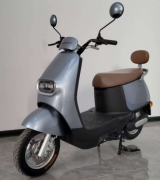
    Descriptions
    Motor Power
    2.0kW
    Voltage
    60V
    Battery
    32AH lithium
    Range
    93km
    Maximum Speed
    45km/h
    Tire Size
    3.00-10
    Brake Type
    Disc/drum brake
    Payload Capacity
    75kg
    • Electric Cargo Tricycles: It can be used to assess requirements for last-mile delivery, light-duty freight transport, and certain types of commercial transport.

    Model recommendation: A31
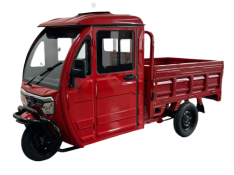
    Descriptions
    Motor Power 3.0kW
    Voltage 72V
    Battery 65AH lead acid
    Range 72-83km
    Maximum Speed 25/40km/h
    Tire Size 3.75-12/4.00-12
    Brake Type Disc/drum brake
    Payload Capacity 300kg

    • Four-Wheel Electric Utility Vehicles: Suitable for buyers with needs related to on-site campus transport, small-cargo handling, or other specific operational requirements.

    Model recommendation: A41
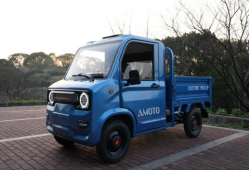
    Descriptions
    Motor Power 3.0kW
    Voltage 72V
    Battery 106AH lithium
    Range 115-127km
    Maximum Speed 25/40km/h
    Tire Size 4.50-12
    Brake Type Disc Brake
    Payload Capacity 300kg

    • OEM/ODM Opportunities: You can discuss branding, specifications, packaging, and other customization requirements with the AMOTO.

    In addition, AMOTO has registered a company in the Netherlands, enabling it to handle all customs clearance, tax payment, and compliance obligations within the EU, while holding relevant EU compliance certificates through its UK entity.

    Furthermore, the company maintains a stock of spare parts in Germany, allowing for rapid parts supply and efficient resolution of after-sales issues.

    To further evaluate the potential for collaboration, please visit the AMOTO official website https://www.amoto.group/ to get product information and contact the team for quotes and  inquiries.

    7.FAQ About Choosing an Electric Vehicle Manufacturer
       Q1: What should I look for in an electric vehicle manufacturer?
    Key areas for evaluation include manufacturing capabilities, product quality, certification compliance, powertrain systems, price transparency, delivery reliability, and after-sales support. For wholesale and import operations, it is also essential to verify minimum order quantities, spare parts availability, and terms for long-term cooperation.
          Q2: How can I verify whether an electric vehicle manufacturer is reliable?
    You can verify information regarding the enterprise and its production facilities, request product specifications, certification documents, and quality inspection records, and further confirm details through sample testing, factory audits, or third-party inspections. Certification documents must correspond to the specific vehicle models and configurations actually being purchased.
         Q3: Is a lower factory price always better?
    No, Buyers also need to consider costs associated with transportation, importation, maintenance, spare parts, and warranties. A lower initial quote—if accompanied by inconsistent quality or inadequate after-sales support—could lead to higher long-term operating costs.
         Q4: Can I customize electric vehicles under my own brand?
    Yes, AMOTO offer OEM/ODM services, though the specific scope of support depends on the vehicle model, order volume, configuration requirements, and development capabilities. Buyers should clarify details in advance, such as branding, packaging, customization costs, minimum order quantities, and lead times, as well as the impact of any modifications on certifications.
         Q5: How do I choose between two-wheel, three-wheel and four-wheel electric vehicles?
    The choice should be based on passenger needs, cargo weight, transport distance, road conditions, and regulatory requirements. Two-wheeled models are generally better suited for flexible personal mobility, while three-wheeled models can be used for certain types of cargo transport and commercial delivery, four-wheeled models can be evaluated for specific transport and operational scenarios.
         Q6: Why is certification important when importing electric vehicles?
    Certification and compliance documents help verify whether a vehicle meets the technical and market-access requirements applicable to the target market.
     If the procured vehicle models lack the certificates or certification documents required by the target market, this will directly impact subsequent sales or even prevent importation.
    Buyers should verify the vehicle category, the scope of certification, and the documentation required for registration before signing a contract, rather than assuming that a specific certification applies to all countries and vehicle models.
    Release time: 2026-10-14

    How to Choose the Electric Cargo Pickup Truck

    Lead-Acid vs. Lithium Batteries: How to Choose the Right Battery for an Electric Commercial Vehicle

    Related blog
    2026-10-16
    How to Choose the Electric Cargo Pickup Truck
    2026-09-21
    Lead-Acid vs. Lithium Batteries: How to Choose the Right Battery for an Electric Commercial Vehicle
    2026-09-21
    Electric Cargo Tricycle Buying Guide-How AMOTO A31 Series Meets Every Application Need
    2026-08-26
    Electric Scooter vs Gas Scooter
    CONTACT US

    CONTACT US

    • ADDRESS:ROOM 2603,JIARUI EDUCATION MANSION,JINCHENG ROAD 1616,BEIGAN STREET,XIAOSHAN DISTRICT HANGZHOU CITY, ZHEJIANG ,CHINA

    • PHONE:+86 136 5666 4161

    • E-mail: lucia@horeca-pos.cn


    (34569)
    0