
qr Code Url

    Scan qrcode to view mobile website

    Data is empty
    0
    Member Center
    Exit
    Home /Blog /Blog /Electric vehicle selection /Electric Scooter vs Gas Scooter /

    Electric Scooter vs Gas Scooter

    Electric Scooter vs Gas Scooter

    As global urban transportation evolves towards greener, lower-carbon, and more efficient models, electric scooters are becoming an increasingly popular two-wheeled mobility product among consumers, dealers, and business users. Compared to traditional gas scooters, electric vehicles not only change the power source and appearance but also exhibit significant differences in operating costs, maintenance methods, driving experience, and urban application scenarios.
    For buyers looking for suppliers of electric motorcycles, electric scooters, three-wheeled electric vehicles, or four-wheeled electric vehicles, choosing the right power source involves more than just comparing prices; it requires comprehensive consideration of range, power, load capacity, maintenance costs, product structure, and local market demand.
    As a professional supplier of electric mobility products, AMOTO focuses on electric two-wheelers, three-wheeled electric vehicles, electric cargo vehicles, mobility scooters for the elderly, and four-wheeled electric vehicles, providing diverse mobility solutions for dealers, retailers, and business customers worldwide. For more product models, please visit our website https://www.amoto.group to view more product information and inquire about pricing.
    1.What is the main difference between electric scooter and gas scooter
    The most obvious difference between electric and gasoline powered scooters lies in their power systems.
    Gas scooters rely on a gasoline engine for power, requiring the fuel, engine, exhaust system, and numerous mechanical components to work together. Electric scooters, on the other hand, primarily consist of a motor, battery, controller, and electrical system.
    This structural difference directly impacts the user experience.
    Electric scooters offer more direct starting, relatively lower noise levels during operation, and eliminate the need for routine engine maintenance such as oil changes. Therefore, electric two-wheelers are highly practical for urban commuting, short-distance delivery, community mobility, and commercial vehicle fleets.

    1)Power Performance

    Many users used to believe that gasoline-powered scooters had an advantage in terms of power, but with the development of electric motor technology and lithium battery technology, medium and high power electric scooters also could meet the needs of a large number of daily and commercial uses.

    https://www.amoto.group/adult-electric-scooter.html

    The A21 model which from AMOTO is a product that combines cost-effectiveness and practicality. It features a 2000W motor, a 60V 32Ah lithium battery, a top speed of 45km/h, and a maximum climbing angle of 20°.

    For urban commuting, community roads, and short-distance delivery, this power configuration provides good starting and climbing performance.

    The A21's dimensions are approximately 1692×682×1095mm, with a wheelbase of 1188mm and a ground clearance of 180mm. This size design balances urban road agility and vehicle stability, making it ideal for markets that require a combination of commuting and practicality.

    2)Driving range

    Range is always one of the most important factors for consumers when comparing electric scooters and gas scooters.

    Obviously, refueling takes less time than charging, making gasoline scooters more convenient for extending range compared to electric scooters. However, since gasoline is a non-renewable resource, electric vehicles will be the primary development trend for the future.

    The A21 comes standard with a 60V 32Ah lithium battery, offering a range of 60–70km and a charging time of approximately 6–8 hours. This range covers a wide range of practical applications, including daily urban commuting, short-distance commercial delivery, and community transportation.

    Of course, actual range will be affected by factors such as driving speed, load, road gradient, temperature, tire pressure, and driving habits. Therefore, when purchasing an electric vehicle, one should not only consider battery capacity but also vehicle weight, motor power, and actual usage scenarios.

    If your market requires longer range, higher power, or different battery solutions, please contact us at https://www.amoto.group for other product types or higher-configuration options.

    3)Driving cost

    From a long-term operational perspective, one of the biggest advantages of electric scooter is their simpler energy and maintenance methods.
    Gasoline-powered scooters require continuous purchases of gasoline, and the engine also involves traditional maintenance items such as oil changes, spark plug replacements, and filter replacements. Electric scooters use electricity as their energy source, and their motor structure is relatively simple. Routine maintenance focuses more on components such as the battery, tires, braking system, electrical connections, and controller.

    4)Driving experience

    Compared to larger electric cars, electric scooters offer advantages such as a compact size, agile steering, and easy parking.
    They are more convenient than cars for short-distance daily commutes, and electric scooters are also quieter than gasoline-powered scooters, making them more suitable for urban roads. This is why electric scooters continue to receive attention in the urban commuting market.

    2.Different model for application

    1)2-wheeled electric scooter: for urban commuting and personal travel

    https://www.amoto.group/adult-electric-scooter.html

    The main selling points of two-wheeled electric scooter are their lightweight, flexibility, economy, and ease of parking.

    For example, the A21 features a 2-wheeled structure, a compact body size, a 2000W motor, and a range of 60–70km, making it suitable for urban commuting and some commercial use scenarios.
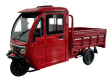

    2)3-wheeled electric tricycle: freight and commercial delivery
    https://www.amoto.group/electric-cargo-tricycle.html
    Three-wheeled electric tricycle emphasize stability and cargo capacity, making them suitable for express delivery, agricultural product transportation, community services, and last-mile logistics in cities.

    3)4-wheeled electric truck: stability and multi-functional applications
    https://www.amoto.group/4-wheel-mobility-scooter.html
    The 4-wheeled electric truck offer significant advantages when users require higher load capacity, more space, or a closed driving environment.

    The A41 4-wheeled electric truck equipped with a 3.0kW powerful motor, a large capacity 100Ah lithium battery, and a large cargo space, making it more suitable for agricultural freight, industrial and commercial transportation.

    3.How to choose between electric scooter VS gas scooter

    If the primary needs are traditional long-distance use, convenient refueling, and a mature fuel infrastructure, gas scooters still have their market advantages.

    However, if the focus is on urban commuting, low noise, energy costs, routine maintenance, and green travel, electric scooters are becoming an increasingly competitive option.

    For commercial buyers, it's crucial to consider whether the product matches their target market customer group. For example, targeting the following customer types:
    • Urban personal commuting: Lightweight two-wheeled electric scooters are suitable.
    • Short-to-medium distance highway commuting: 1000W–2000W electric motorcycles are recommended.
    • Delivery and freight: High-load-bearing electric tricycles are suitable.
    • Industrial parks, agriculture, and commercial delivery: High-load-bearing four-wheeled electric vehicles are suitable.
    • Dealer product portfolios: A mix of two-wheeled, three-wheeled, and four-wheeled products can be offered to cover different customer groups.
    The competition between electric scooters and gas scooters is essentially a long-term competition between two power sources in terms of cost, efficiency, environmental friendliness, and usage scenarios.
    For consumers, choosing a vehicle should be based on commuting distance, road conditions, and usage frequency; for overseas dealers, further attention should be paid to product configuration, certification requirements, bulk supply capabilities, after-sales parts availability, and the long-term partnership capabilities of suppliers.
    From lightweight electric scooters to high-powered electric motorcycles, cargo tricycles, and multi-functional four-wheeled electric vehicles, AMOTO is building a comprehensive electric mobility product system covering various application scenarios. 

    Visit https://www.amoto.group to get your electric vehicle and quotation.

    Release time: 2026-08-26

    Electric Cargo Tricycle Buying Guide-How AMOTO A31 Series Meets Every Application Need

    A31-A Reliable Electric Farm Vehicle for Agricultural Transport

    Related blog
    2026-10-16
    How to Choose the Electric Cargo Pickup Truck
    2026-10-14
    How to Choose an Electric Vehicle Manufacturer for Your Business
    2026-09-21
    Lead-Acid vs. Lithium Batteries: How to Choose the Right Battery for an Electric Commercial Vehicle
    2026-09-21
    Electric Cargo Tricycle Buying Guide-How AMOTO A31 Series Meets Every Application Need
    CONTACT US

    CONTACT US

    • ADDRESS:ROOM 2603,JIARUI EDUCATION MANSION,JINCHENG ROAD 1616,BEIGAN STREET,XIAOSHAN DISTRICT HANGZHOU CITY, ZHEJIANG ,CHINA

    • PHONE:+86 136 5666 4161

    • E-mail: lucia@horeca-pos.cn


    (34569)
    0